Find which UK school year group a child is in by age, with key stages, exam years and the birth-date cutoff that decides who starts when. Use the calculator below to look up a specific date of birth, then scroll for the full reference table and what each year involves.
Find your child’s school year
Enter your child’s date of birth. The calculator returns their current school year, age band, key stage and the year each national milestone falls in, using the standard England and Wales rules (1 September to 31 August academic year, Reception in the September after a child’s fourth birthday).
Calculation runs entirely in your browser — nothing is sent to us. Scotland and Northern Ireland use different cutoffs (see the sections below). The calculator does not account for delayed entry granted to summer-born children, or for any movement between year groups arranged with a school.
Quick reference: school year by age
This is the standard year-group structure used in England. Wales follows the same year numbering. Northern Ireland uses similar numbering with some differences. Scotland uses a different system (P1–P7, S1–S6) which is covered separately further down the page.
| School year | Age during the year | Key stage | Notable milestones |
|---|---|---|---|
| Reception (Year R) | 4–5 | EYFS | First year of school; phonics introduced |
| Year 1 | 5–6 | Key Stage 1 | Phonics screening check (statutory) |
| Year 2 | 6–7 | Key Stage 1 | End of KS1; teacher assessment (SATs now optional) |
| Year 3 | 7–8 | Key Stage 2 | Start of KS2; some children move from infant to junior school |
| Year 4 | 8–9 | Key Stage 2 | Multiplication Tables Check (statutory) |
| Year 5 | 9–10 | Key Stage 2 | 11+ entrance exams (where applicable) often sat early in Year 6 |
| Year 6 | 10–11 | Key Stage 2 | KS2 SATs (May); transition to secondary school |
| Year 7 | 11–12 | Key Stage 3 | First year of secondary school |
| Year 8 | 12–13 | Key Stage 3 | Settling year in secondary |
| Year 9 | 13–14 | Key Stage 3 | GCSE option choices typically made by the end of this year |
| Year 10 | 14–15 | Key Stage 4 | GCSE courses begin; mock exams late in the year |
| Year 11 | 15–16 | Key Stage 4 | GCSE exams (May/June); results in late August |
| Year 12 | 16–17 | Key Stage 5 | Sixth form/college; first year of A‑levels or equivalent |
| Year 13 | 17–18 | Key Stage 5 | A‑level exams; UCAS applications; results in mid-August |
What each school year actually needs
Once you know which year your child is going into, the kit list more or less writes itself. These are the things that come up again and again at each stage — nearly all under £15, and every one checked as in stock on Amazon UK on 15 August 2026.
Reception & Year 1Ages 4–6
The year everything you own acquires a name tag. Buy labels first; the rest can wait.

Stick-on name labels, 60 pack
Sixty stick-on labels that survive the washing machine. The highest-return £9 of the school year.
View on Amazon
Sew-in woven name tapes, 72 pack
Sew-in woven tapes for schools that still insist on them. More work than stickers, but they outlast the uniform.
View on Amazon
Ayra school book bag
The classic strapped book bag. The strap is what stops it being dragged along the pavement.
View on Amazon
Sistema Bento lunch box
Compartments, so the sandwich never meets the yoghurt. Four pounds.
View on Amazon
Read Write Inc. phonics flashcards
Matches the Read Write Inc. sounds most English primaries actually teach, rather than a rival scheme.
View on Amazon
Collins First Words flashcards
First words on cards — the quiet confidence builder before a September start.
View on AmazonKey Stage 1 (Years 1–2)Ages 5–7
Packed lunches start in earnest. What matters is that it seals, survives a book bag, and comes home again.

Sistema snack pots
Stackable 130ml pots. Small enough for a Reception lunchbox, sturdy enough to come home again.
View on Amazon
Sistema 200ml containers
The 200ml pots that fit inside every lunch bag here. Buy two; one will live at school.
View on Amazon
Mepal Campus bento box
Dutch-made, dishwasher-proof, and the lid genuinely stays shut inside a rucksack.
View on Amazon
ION8 kids water bottle, 350ml
The bottle that genuinely does not leak into a book bag. Opens one-handed, which matters at five.
View on Amazon
Fringoo PE drawstring bag
Zipped front pocket, so the swimming badge and the lunch money stop vanishing.
View on Amazon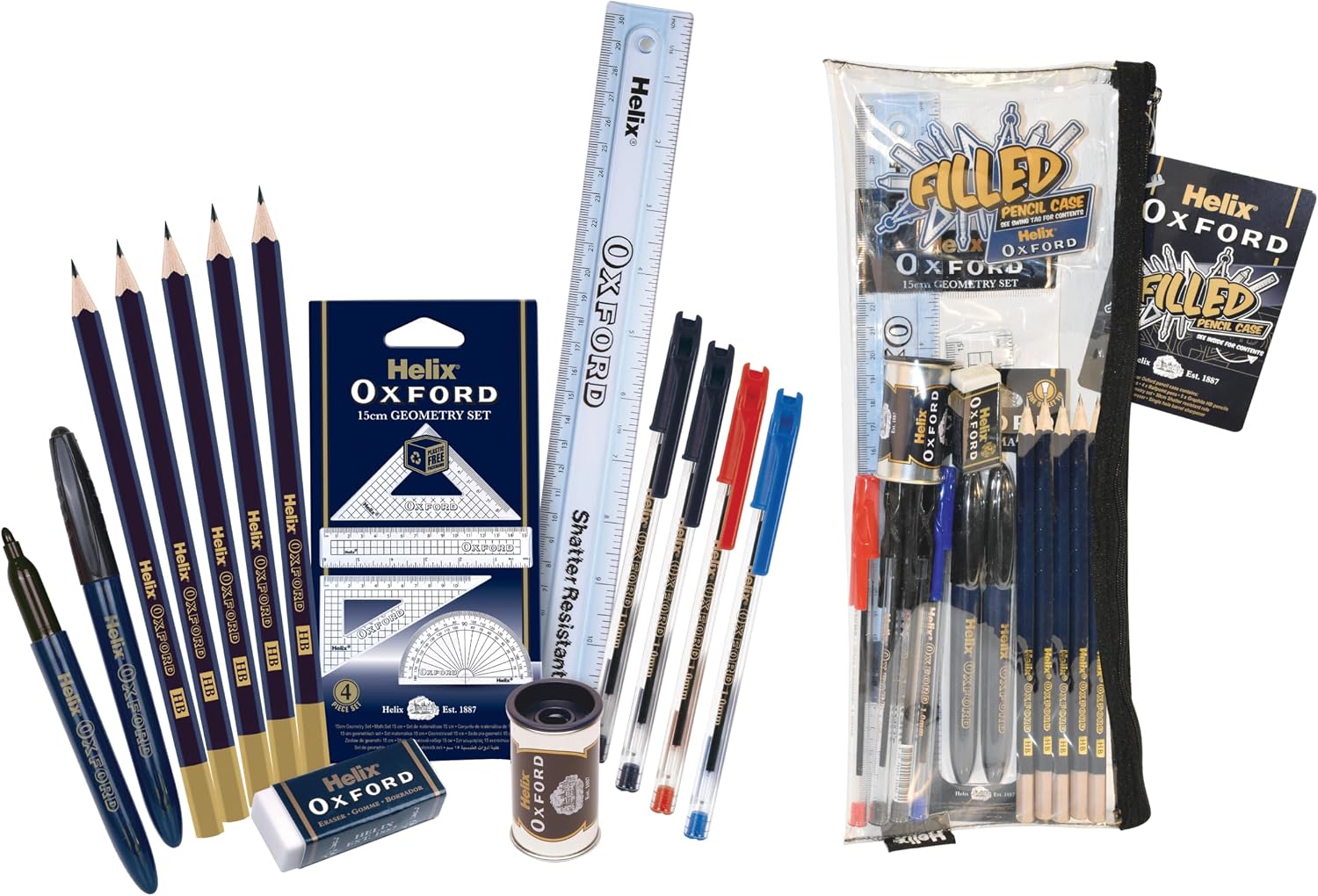
Helix Oxford filled pencil case
Filled, so you are not buying fourteen separate things in the last week of August.
View on AmazonKey Stage 2 (Years 3–6)Ages 7–11
Bigger appetites, bigger bottles, and the first real push on reading fluency and times tables.

Collins High Frequency Words cards
The words children are expected to read on sight by the end of Key Stage 1.
View on Amazon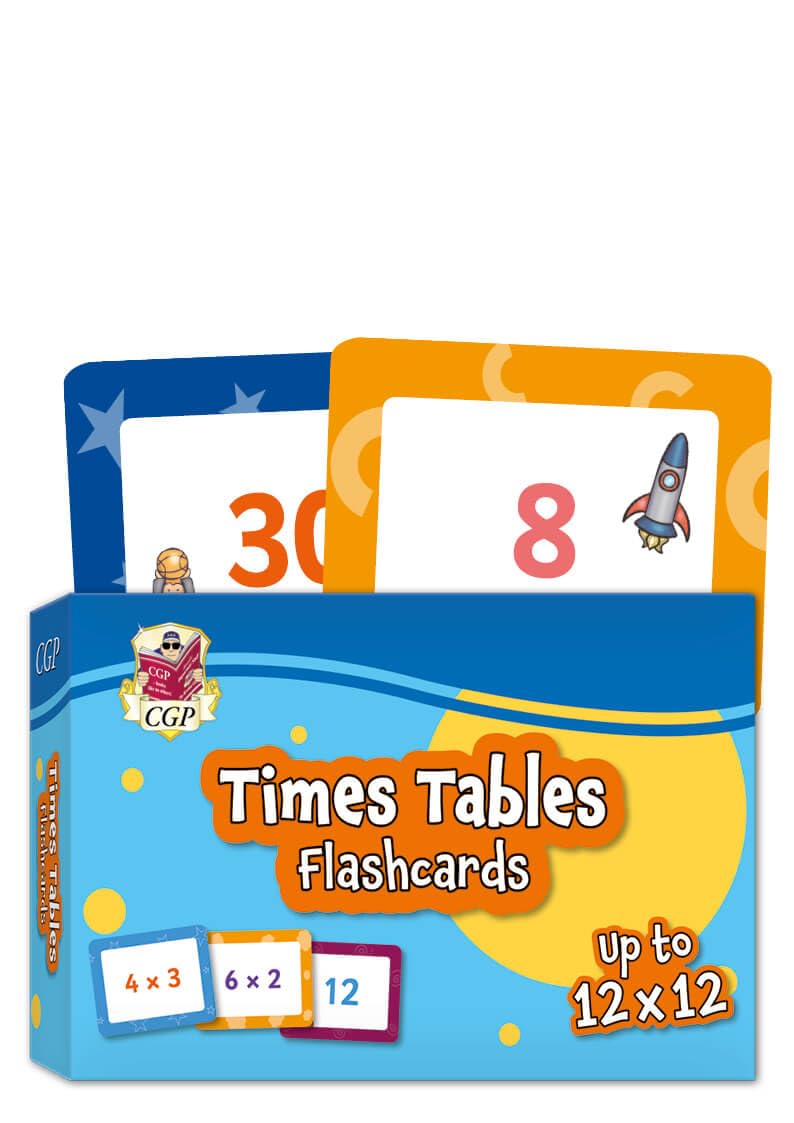
Times tables flashcards, 1–12
The 1 to 12 tables on cards. Year 4 is roughly when this stops being optional.
View on Amazon
Phonics flash cards, 20 stages
Phonics in twenty staged steps — useful if reading has not quite clicked by Year 2 or 3.
View on Amazon
ION8 steel water bottle, 400ml
Steel, 400ml, no plastic taste. The upgrade when they outgrow the little one.
View on Amazon
Gloppie insulated lunch bag
Insulated bag rather than a hard box — older children want something that does not look like a lunchbox.
View on Amazon
Kono school backpack
A proper rucksack for the walk to school, once a book bag stops being enough.
View on AmazonYear 7 and upAges 11+
Secondary kit lists are surprisingly old-fashioned. Most of it is stationery, and most of it is cheap.

Helix Oxford maths set
The Helix Oxford tin, unchanged for decades and still on almost every Year 7 kit list. Two pounds.
View on Amazon
Casio fx-83GTCW calculator
Named on almost every Year 7 list, and permitted in GCSE exams. Buy once.
View on Amazon
Helix clear exam pencil case
Clear case, because exam boards insist on one. Lasts from Year 7 to GCSEs.
View on Amazon
BIC Matic mechanical pencils
Mechanical pencils with erasers on the end. 103,000 reviews and still £3.
View on Amazon
BIC Evolution colouring pencils
Wood-free colouring pencils that do not shatter when dropped, which is their whole job.
View on Amazon
As an Amazon Associate we earn from qualifying purchases. Availability and links were checked on 15 August 2026 and can change. It costs you nothing extra.
Year-by-year guide
Each section below covers what happens that year: the age band, the key stage, and any nationally significant assessment or transition.
Reception (also called Year R or YR)
Ages 4–5. Early Years Foundation Stage. The first year of school. Children typically start in the September after their fourth birthday. Reception is play-led but introduces phonics, number and early writing. There is no national assessment at the end of Reception, but teachers carry out an EYFS profile to record each child’s progress.
Year 1
Ages 5–6. Key Stage 1. The pace picks up: more formal phonics, reading and number work. Year 1 ends with the statutory phonics screening check, a short reading test that asks children to decode a list of real and made-up words.
Year 2
Ages 6–7. End of Key Stage 1. KS1 SATs in reading and maths used to be statutory but are now optional from 2024 onwards. Most schools use teacher assessment alongside any internal testing. Year 2 is the last year of infant school for children whose primary is split into infant and junior.
Year 3
Ages 7–8. Start of Key Stage 2. For children at separate infant and junior schools, Year 3 is the first year at the new school. The curriculum widens: longer writing tasks, formal multiplication and division, more independent reading.
Year 4
Ages 8–9. Key Stage 2. The Multiplication Tables Check is statutory at the end of Year 4. Children sit a short on-screen test of times tables up to 12 × 12. There are no national league tables for the result — it is intended as a diagnostic for schools.
Year 5
Ages 9–10. Key Stage 2. No national assessment, but a busy year for families considering selective secondary schools. 11+ entrance exams for grammar schools and many independent schools are sat in the autumn term of Year 6 in most areas, which means the preparation, registration and testing windows fall in Year 5 and the summer of Year 5/Year 6.
Year 6
Ages 10–11. End of Key Stage 2. The biggest year in primary. Children sit KS2 SATs in reading, maths and grammar/punctuation/spelling over four days in May. Secondary school applications are submitted in October of Year 6, with offers issued on National Offer Day in March. Year 6 ends with a transition visit to the new secondary school in July.
Year 7
Ages 11–12. Start of Key Stage 3. First year of secondary school. New uniform, new building, multiple subject teachers and a timetable that runs over two weeks at most schools. Year 7 children are taught the full Key Stage 3 programme: English, maths, science, modern foreign languages, humanities, design and technology, art, music, PE and computing.
Year 8
Ages 12–13. Key Stage 3. A settling year. The curriculum continues much as in Year 7 but with more depth and longer assessments. Many schools begin discussions about GCSE options towards the end of Year 8.
Year 9
Ages 13–14. End of Key Stage 3. The GCSE option choices are usually made by the end of Year 9: which subjects to drop and which to take through to GCSE. English, maths and science are compulsory; most pupils pick three or four further options.
Year 10
Ages 14–15. Start of Key Stage 4. GCSE courses begin in earnest. Most schools sit mock exams late in Year 10 or early Year 11. Some GCSE qualifications include controlled-assessment or coursework elements that begin in Year 10.
Year 11
Ages 15–16. End of Key Stage 4. GCSE exams are sat in May and June. Results are issued on GCSE Results Day in late August. The end of Year 11 is the end of compulsory school education in England, but young people must continue in some form of education or training (sixth form, college, apprenticeship or approved training) until they turn 18.
Year 12
Ages 16–17. Start of Key Stage 5. Sixth form or further-education college. Most students take three A‑levels (with some taking four) or an equivalent route such as T‑levels, BTECs or an apprenticeship. Year 12 ends with internal exams or, in some subjects, AS-level papers.
Year 13
Ages 17–18. End of Key Stage 5. A‑level exams are sat in May and June. UCAS applications for university are submitted earlier in the year (the equal-consideration deadline for most courses is in late January). A‑level Results Day falls in mid-August, and most university courses start the following September or October.
When does the UK school year start?
The UK school year runs from September to July. The academic year is divided into three terms (autumn, spring and summer), each split into two half-terms with a one-week break in the middle. The exact term dates differ between local authorities, individual schools and the four nations of the UK.
For year-group placement, the only date that matters is 1 September. An academic year is named after the calendar years it spans — the year that begins in September 2025 and ends in July 2026 is referred to as the 2025–26 school year.
How the cutoff works
Children born between 1 September and 31 August form a single year group. A child born on 1 September is the oldest in their year. A child born on 31 August is the youngest — almost a full year younger than the eldest classmates.
Most children start Reception in the September after their fourth birthday. They turn 5 at some point during that academic year. Compulsory school age begins on the prescribed day (31 December, 31 March or 31 August) following a child’s fifth birthday, whichever comes first. In practice, almost all children start school in the September that follows their fourth birthday because that is when state-funded admission authorities are required to offer a place.
Summer-born children: the deferred entry option
Children born between 1 April and 31 August are described as “summer-born”. They are the youngest in their school year. Department for Education guidance allows parents of a summer-born child to request that the child starts Reception a full year later, when the child is 5, rather than 4. The child would then continue in that lower year group throughout their school career.
Decisions on these requests are made by the school’s admission authority (the local authority for community schools, or the school itself for academies and voluntary-aided schools). Each authority publishes its own policy, so the outcome can vary. The Department for Education supports the right of parents to choose deferred entry, but does not believe it should become the norm. If you are considering this route, contact your local authority’s school admissions team early in the year before your child would normally start Reception.
Scotland and Northern Ireland
Scotland uses a different system. Primary schooling runs from P1 to P7 (ages roughly 4/5 to 11/12), followed by secondary S1 to S6 (ages roughly 12 to 18). The cutoff date for school entry is 1 March rather than 1 September: children who turn 5 between 1 March and the start of the next school year start P1 in August. Scottish Highers and Advanced Highers replace A‑levels.
Northern Ireland uses similar Year 1–Year 14 numbering to England, but with different age bands: children start Year 1 between the ages of 4 years 2 months and 4 years 9 months, depending on birth date relative to the 1 July cutoff. GCSEs are sat in Year 12 and A‑levels in Year 14, a year “behind” the equivalent English year numbers.
Wales follows the same year numbering as England (Reception to Year 13). Welsh schools follow the Curriculum for Wales rather than the National Curriculum, and Welsh-medium schools deliver lessons primarily through the Welsh language.
More date tools and countdowns
This page sits alongside the rest of the date tools at Until Then. If you are planning around the school calendar, our countdowns to Halloween, the end of the financial year and the end of the current month can sit alongside this reference. The full list is on the all calculators page.
If you work in a school yourself — term-time only, or part time — our part-time holiday entitlement calculator covers how term-time and part-year contracts accrue annual leave. For family days out during half-term, school holidays and the long summer break, head over to our sister site Saturday and Sunday — family days out worth doing, gardening jobs worth knowing and recipes worth keeping.
Frequently asked questions
What year is my child in if they were born in August?
An August-born child is the youngest in their year group. They will be in the same year as a child born the previous September, even though they are nearly a year younger. They start Reception in the September after their fourth birthday — turning 5 at the very end of the school year. Use the calculator above to confirm a specific year group.
What year is my child in if they were born in September?
A September-born child is the oldest in their year group. The cutoff falls on 31 August, so a child born on 1 September is in the same year as classmates born up to 31 August the following year — almost a year younger.
When does the school year start in the UK?
The school year starts in September and ends in July, in England, Wales and Northern Ireland. Scottish schools start in mid-August. Exact term dates vary by local authority and individual school.
What is the difference between Year 6 and Y6?
None — “Y6” is just the abbreviated form of “Year 6”. Both refer to the final year of primary school, when children are aged 10 to 11. The same applies for Y1, Y7 and so on.
What is Reception?
Reception is the first year of primary school in England, for children aged 4 to 5. It sits within the Early Years Foundation Stage (EYFS) and runs before Year 1. It is also called Year R or YR.
Is Reception compulsory?
Reception itself is not compulsory. Compulsory school age does not begin until the prescribed day (31 December, 31 March or 31 August) following a child’s fifth birthday. In practice, almost all children attend Reception because that is when admission authorities are required to offer a place. Parents who choose to delay can request a Year 1 start at age 5, or a deferred Reception place a year later for summer-born children.
What age is Year 7 in the UK?
Year 7 children are aged 11 to 12 during the school year. Year 7 is the first year of secondary school in England and Wales, and is the start of Key Stage 3. Use the calculator above to check whether your child is in Year 7 by entering their date of birth.
What age is Year 11 in the UK?
Year 11 children are aged 15 to 16. It is the year in which most pupils sit their GCSE exams in May and June. The school-leaving age in England is technically 16 (the last Friday of June in Year 11), but young people are required to remain in education or training until they turn 18.
What age do you take GCSEs?
Most pupils take their GCSEs at the end of Year 11, when they are 15 or 16 years old. Subjects are typically chosen at the end of Year 9, so the GCSE course runs across Years 10 and 11.
What age do you take A‑levels?
Most students take A‑levels at the end of Year 13, aged 17 or 18. The two-year A‑level course runs across Years 12 and 13, in sixth form or at a further-education college.
What is a year group calculator?
A year group calculator is a tool that takes a child’s date of birth and returns the school year they are currently in. The calculator at the top of this page does exactly that, and shows the year each upcoming national assessment will fall in.
Information correct as of 2 May 2026. Year groups, key stages and assessment arrangements follow the National Curriculum framework set by the Department for Education. School admissions guidance and the 31 August cutoff are described on gov.uk — school admissions: starting age. The summer-born admissions process is described on gov.uk — summer-born children: advice for parents. National Curriculum key stages are detailed at gov.uk — the National Curriculum. Always check with your child’s school or local authority before making placement decisions.